Assessment first
History, medicines and goals reviewed

CLINICIAN-LED HOME CARE
At-home IV care brings a licensed healthcare professional to your location for an assessment-led infusion. The visit should include a suitability review, clean preparation, monitoring throughout treatment and clear aftercare. The exact fluid or medicine must be selected for your clinical needs.
History, medicines and goals reviewed
Single-use supplies and a clean field
Comfort and IV site checked throughout
Normal effects and warning signs explained
WHAT THE VISIT IS
A home IV visit is a clinical appointment in which a qualified professional assesses you and, when appropriate, gives prescribed fluids or treatment through a small peripheral cannula. It should follow the same core standards of consent, infection prevention, documentation, monitoring and escalation expected in other healthcare settings.

THE DECISION BEFORE THE DRIP
Suitability depends on the clinical reason for treatment, current symptoms, medical history, medicines, allergies, mobility and whether the home setting is appropriate. A request does not automatically mean an infusion is necessary; oral fluids, clinic review or urgent medical care may be a better option.
The clinician should be able to explain why an IV route is being considered and what alternative options exist.
There must be suitable space, light, hygiene, access and a plan if symptoms change during the visit.
Kidney or heart problems, pregnancy, allergies, regular medicines and previous IV reactions can affect the plan.
FROM REQUEST TO FOLLOW-UP
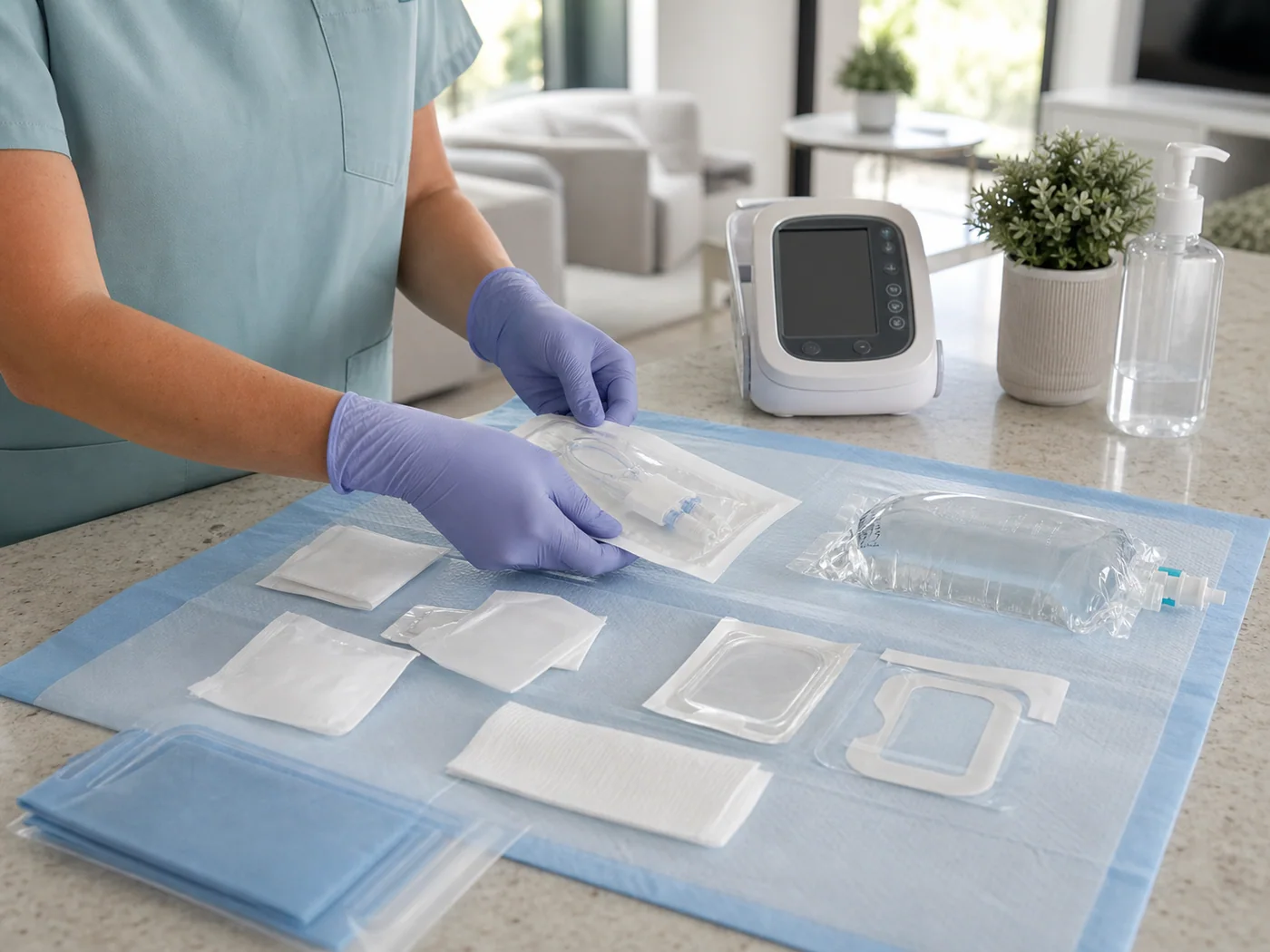
A professional visit has a visible clinical sequence. The practitioner confirms identity and consent, reassesses suitability, prepares a clean field, inserts and secures the cannula, monitors the infusion, removes the cannula safely and documents the visit before leaving.
 ORGANISED CARE
Share the reason for the visit, symptoms, location and relevant medical details. Appointment coordination is not yet treatment approval.
The clinician reviews history, allergies and medicines, checks observations when appropriate and explains benefits, alternatives and risks.
Hand hygiene, skin antisepsis, single-use supplies and a clean preparation field help reduce infection risk.
The cannula is inserted, secured and connected. The practitioner checks comfort, the insertion site and the response during treatment.
The cannula is removed, the site is dressed and you receive written advice, contact details and any follow-up plan.
AN INDIVIDUAL PLAN
The contents depend on the indication and prescription. A plan may involve fluids, electrolytes, vitamins, minerals or medication, but these are not interchangeable and not every option is suitable for every person. Ask for the exact ingredients, doses, purpose, expected limits and possible interactions before treatment begins.
The clinical reason and whether oral treatment or another assessment is more appropriate
Exact ingredients, dose, source, expiry and any allergy or medicine interactions
Planned rate, likely visit time and what will be monitored
Expected short-term effects, warning signs and the follow-up or review plan
KNOW THE SIGNALS
Common short-term issues include discomfort, bruising or tenderness at the cannula site. Important complications can include infiltration into surrounding tissue, vein inflammation, infection, bleeding, fluid or electrolyte problems and a reaction to an infused ingredient. Risk depends on the person and the treatment.
 CLEAR FOLLOW-UP
AFTER THE INFUSION
After the infusion, the practitioner removes the cannula, applies gentle pressure and places a small dressing. You should receive advice specific to the treatment, including what is expected, when normal activities can resume, whom to contact and which symptoms need urgent review.
Keep the dressing in place for the period advised and avoid rubbing or pressing the area unnecessarily.
Follow the treatment-specific advice about fluids, food, activity and medicines; do not assume every infusion has the same aftercare.
Seek clinical advice for increasing redness, warmth, swelling, discharge, persistent pain, fever or symptoms of an allergic reaction.
Keep the provider's contact details and attend any recommended review before arranging another session.
BEFORE YOU BOOK
Use a licensed healthcare provider that can identify the responsible facility and treating professional, explain the treatment before arrival, maintain traceable records and provide a clear escalation pathway. Marketing language should never replace clinical assessment, informed consent or verifiable credentials.
QUESTIONS BEFORE THE VISIT
You can make an enquiry, but treatment should only be confirmed after a licensed provider reviews your symptoms, medical history, medicines, allergies and whether the home setting is appropriate.
Timing varies with assessment, cannulation, the prescribed fluid or medication and the infusion rate. The provider should give a realistic visit window after the treatment plan is confirmed.
No. An IV uses venous access and carries risks that oral fluids and supplements do not. The IV route should have a clear clinical reason rather than being chosen only for convenience.
You may discuss your goals, but a qualified clinician should decide whether an IV is appropriate and select the formulation, dose and rate after assessment.
Have your identification, medication list, allergy information and relevant medical reports available. Choose a clean, well-lit place with a comfortable seat and easy access for the practitioner.
Tell the clinician immediately during the infusion. After the visit, use the provider's contact pathway for increasing pain, redness, warmth, swelling or discharge, and seek emergency help for severe or rapidly worsening symptoms.
Content last updated: 8 August 2026
START WITH A CONVERSATION
Share your location, reason for the visit and preferred time. The provider should confirm suitability, availability and cost before the appointment.